
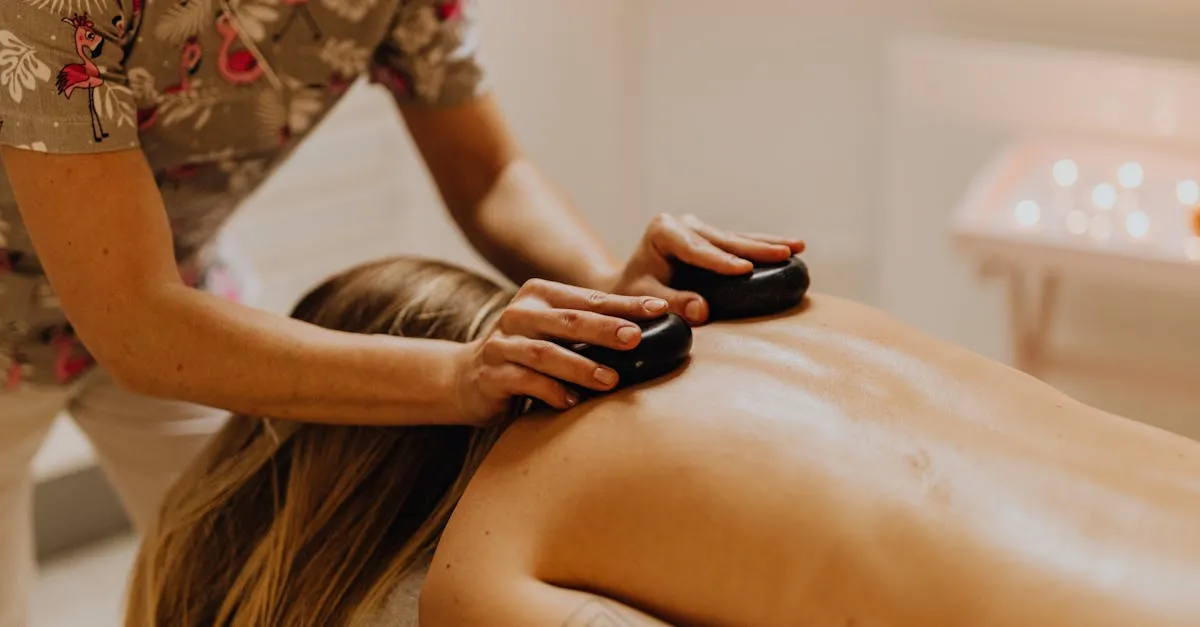
There is an old idea that a massage only counts if it hurts. You lie there gritting your teeth, the thinking goes, and the more it aches the more good it must be doing. Plenty of people arrive at a treatment half braced for exactly that, and quietly relieved to hear it does not have to be that way.
Whether a massage hurts has very little to do with whether it is working. If anything, pain can get in the way of the very thing you came for.
Where “no pain, no gain” comes from
The phrase belongs to the gym, not the treatment room. It is easy to carry that same logic across and assume that deeper and harder must mean more effective. But muscles do not soften because they are forced. They soften when the body feels safe enough to let them, and pain is not a feeling of safety.
What happens when you brace
When something hurts, your body does something very sensible: it tenses. Muscles tighten, your breathing turns shallow, and your system shifts into a state of guarding. That is the opposite of letting go, and it is the opposite of what allows tension to release.
This is where your nervous system comes in. In simple terms it has two gears. One is the alert, fight-or-flight gear we live in when we are stressed or in pain. The other is the calm, rest-and-digest gear, where the heart rate eases, the breath deepens, and the body finally settles. Good massage is an invitation into that second gear.
A study published in the International Journal of Neuroscience looked at exactly this. Researchers found that people who received moderate pressure massage showed “a parasympathetic nervous system response,” the body’s calm, rest-and-digest mode, with “increased vagal efferent activity” (Diego & Field, 2009). Interestingly, very light, feather-light touch did not settle the body in the same way. The point is gentle but clear: it is comfortable, settled pressure, rather than pain, that invites your system to let go.
Comfortable is not the same as soft
So this is not an argument for the lightest possible touch either. Good pressure is firm enough that you feel met, deep enough to reach the tension you are carrying, and never so much that you flinch or hold your breath. When you are bracing against pressure, the muscle underneath is quietly working too, resisting. Ease back to where it feels good, and that same muscle can finally release.
A simple test: if you are holding your breath, clenching your jaw, or gripping the edge of the table, the pressure has gone past helpful. A treatment can feel deep and satisfying, even intense in places, while still being something your body can sink into rather than fight.
The calmer you are, the more a massage can offer
There is good evidence that this settling does something real. A review of the research in Evidence-based Complementary and Alternative Medicine found that, across the studies it examined, salivary cortisol, one of the body’s main stress hormones, tended to fall straight after a massage, noting “a significant reduction immediately following massage therapy” in most of them (Moraska et al., 2008). The same review is honest that these are short-term effects rather than a permanent reset, and that the science is still growing. Even so, it lines up with what so many people feel afterwards: calmer, lighter, a little more themselves.
None of that depends on the treatment hurting. The discomfort of an overly hard massage keeps you in that braced, alert state, working against the calm you came in search of.
Pressure is a conversation
Every treatment at Artemis is led by you. We always begin with a gentle chat about how you are feeling and what you would like from your time on the table, and the pressure is part of that. You are welcome to ask for more or less at any point, to change your mind, or to pause. There is no right answer to “how does that feel”, only what feels right for you that day. If you are new to all this, you might find it reassuring to read what to expect from your first massage.
Whether you choose the deeply calming Gloaming Ritual or a focused Reset Ritual for tired shoulders, the aim is the same: pressure that meets you where you are, so your body can do the thing it has been waiting to do, which is to soften and let go.
When you are ready, you can book your treatment on Fresha. If you would like to talk anything through first, including how firm or gentle you would like things to be, please get in touch.